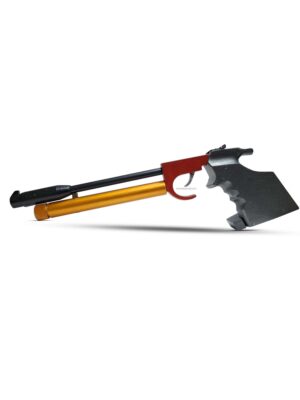
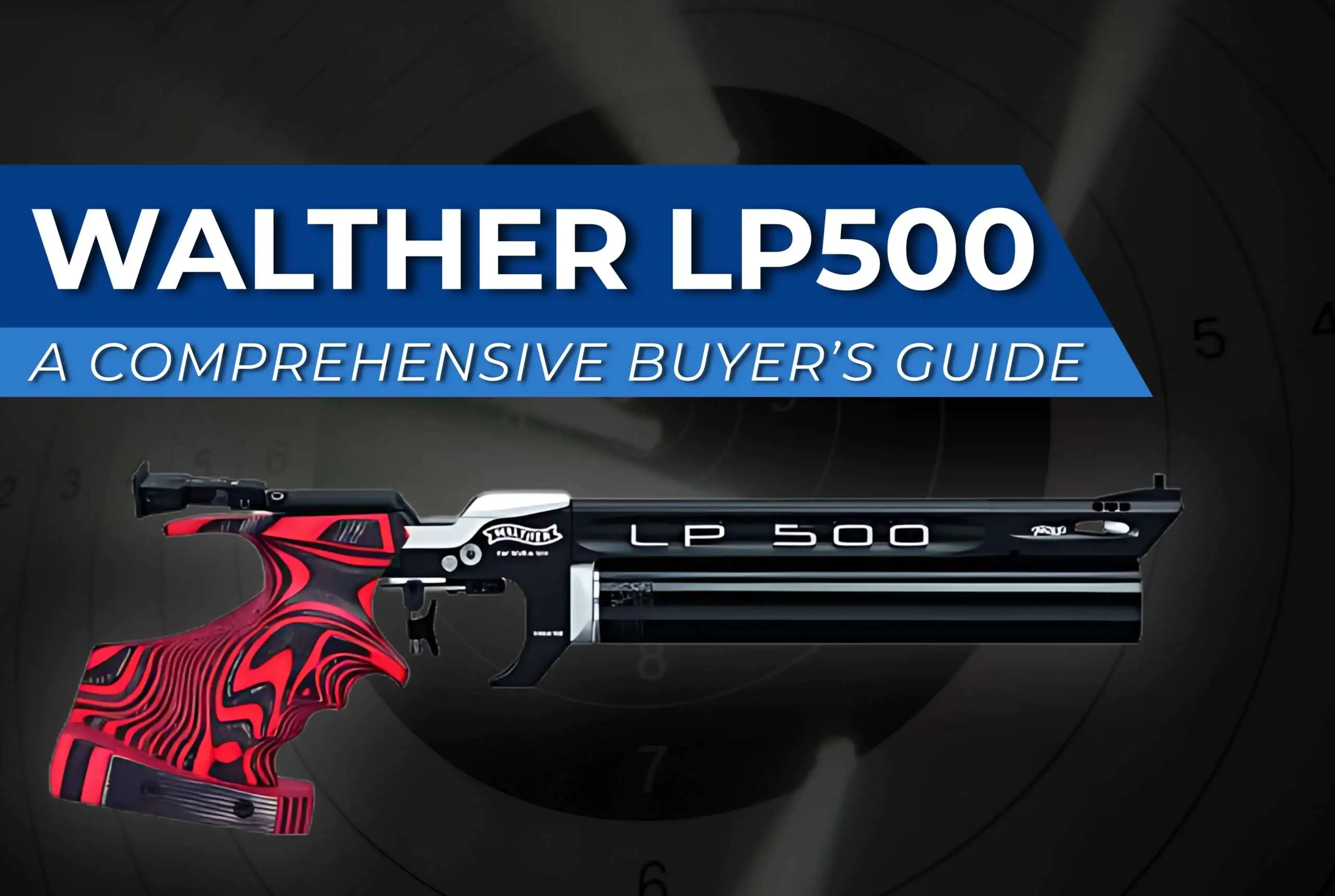
The Walther LP500 is a modular, professional-grade air pistol distinguished by its “Gold” barrel system (ported for recoil elimination) and “X-Change” trigger unit, which allows shooters to swap between Mechanical and Electronic triggers on the same frame. For most competitive shooters, the LP500 Expert with a Mechanical trigger represents the “sweet spot” of value and performance, while the Meister Manufaktur offers luxury ergonomic refinements like the continuously adjustable 5D grip.
Introduction: The “Forever Gun” Philosophy
Buying a match air pistol is often a once-in-a-decade investment. The Walther LP500 separates itself from competitors like the Steyr EVO 10 or Morini CM162EI with one primary philosophy: Modularity. Unlike previous generations where you were locked into your choice of trigger or power plant, the LP500 is built on a universal frame.
You can start with a mechanical trigger and upgrade to electronic later, or swap a heavy aluminum cylinder for a lightweight carbon one. This guide breaks down the critical decision points to help you configure the right pistol for your discipline.
1. The Critical Decision: Mechanical (M) vs. Electronic (E)
The most agonizing choice for a buyer is the trigger system. The LP500 is unique because its “X-Change” system allows you to swap the entire trigger unit in minutes.
● The Mechanical (M) Trigger:
● Feel: The “M” trigger is a masterpiece of linkages. It provides a distinct “glass rod” break. Many shooters prefer this tactile feedback because it offers a physical connection to the sear release.
● Reliability: It is bombproof. There are no batteries to die mid-match and no circuits to fail. If something goes wrong, a gunsmith can usually fix it with standard tools.
● Verdict: Choose the M-Trigger if you value reliability and distinct tactile feedback. It is also significantly cheaper.
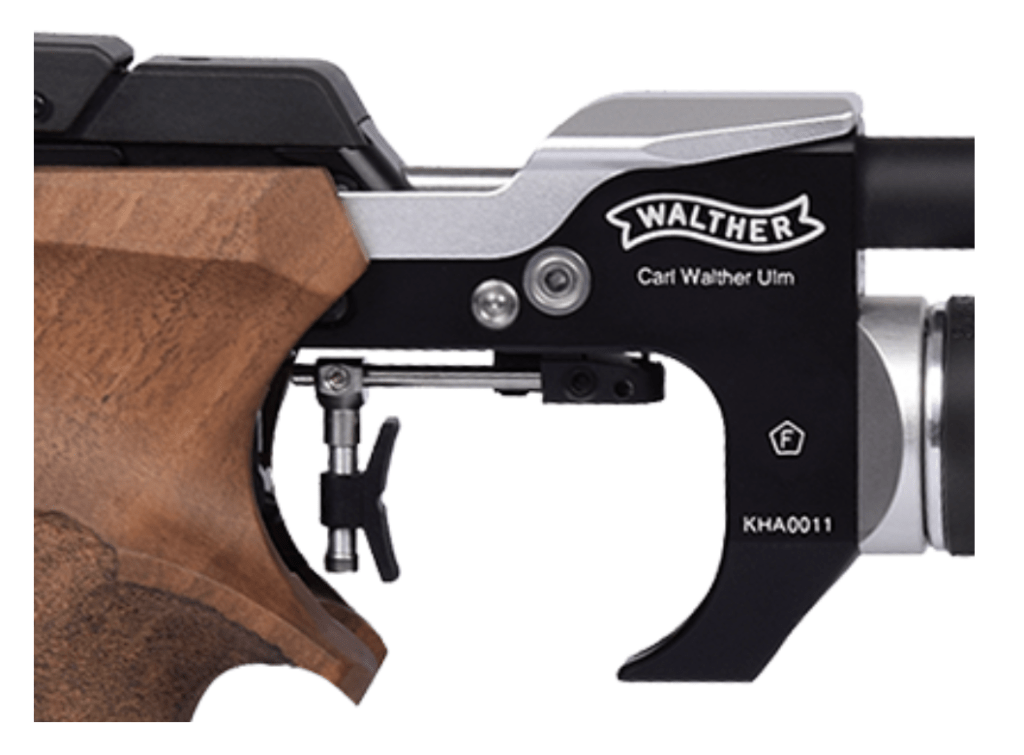
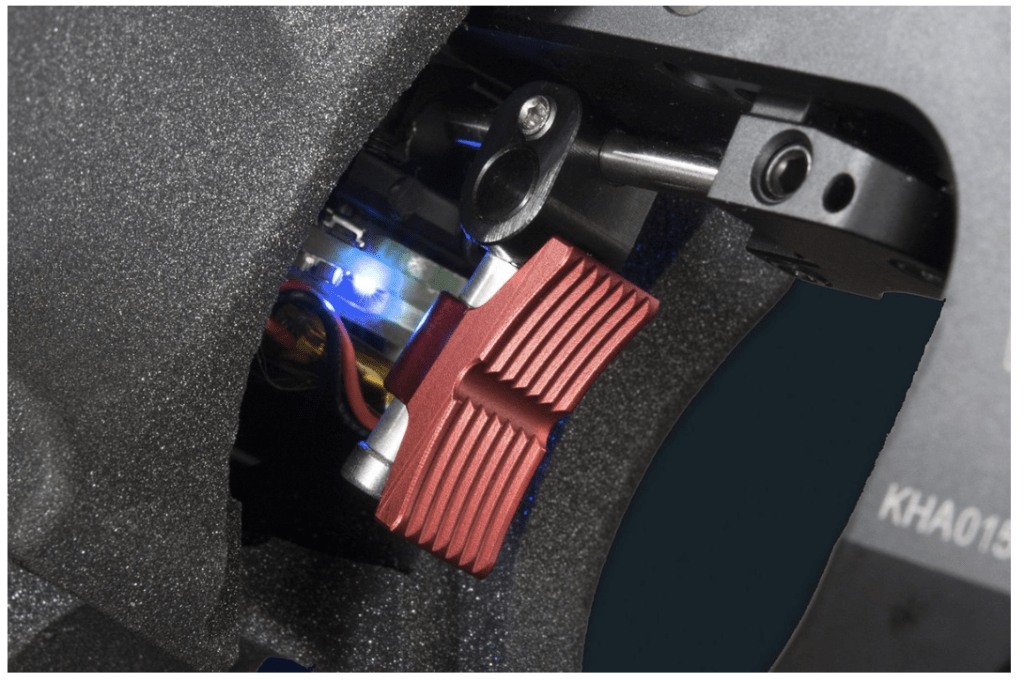
● The Electronic (E) Trigger:
● Feel: The “E” trigger uses a microswitch. The release is instantaneous and vibration-free. It eliminates the tiny amount of kinetic energy required to disengage a mechanical sear, theoretically offering a “purer” shot.
● The Advantage: It enables dry-fire practice without cocking the lever (a massive quality-of-life improvement). It also boasts “wear-free” consistency—the trigger weight won’t drift over thousands of shots.
● Power: It uses a rechargeable battery (USB charging) that lasts for thousands of shots. Features an LED status indicator.
● Verdict: Choose the E-Trigger if you are an elite shooter chasing decimal points, or if you do high-volume dry fire training.
2. The Barrel Systems: Silver vs. Gold
This is where the performance gap exists. Walther markets two barrel tiers, and it is vital to understand the difference before buying the “Basic” model.
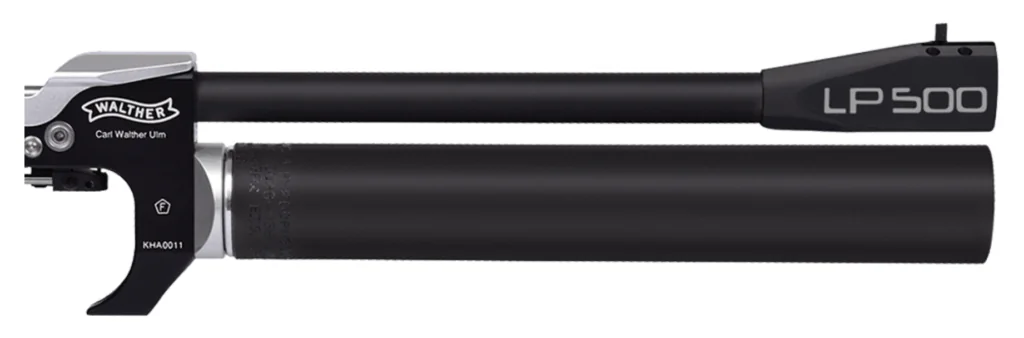
● The Silver Barrel (Found on: LP500 Basic):
This is a high-precision match barrel, but it lacks the advanced gas management systems. It relies solely on a muzzle compensator to strip turbulent air.
● Consequence: You may feel a slight “jump” or recoil compared to the Gold barrel.
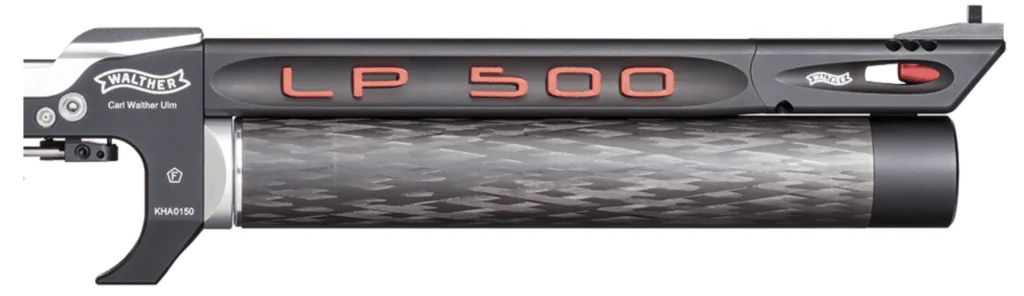
● The Gold Barrel (Found on: Expert & Meister):
● The “Stabilizer”: This barrel features gas ports (vents) drilled into the top. As the pellet travels down the barrel, excess air is vented upwards, creating a downward force that counteracts muzzle flip.
● The “Linear Absorber”: Inside the shroud, a tungsten weight moves backward pneumatically at the exact moment of firing. This backward mass cancels out the forward momentum of the pellet.
● Result: When tuned correctly, the gun barely moves when fired. This “dead” feeling is crucial for rapid recovery and mental confidence.
● Buying Tip: Unless you are on a strict budget, buy the Expert to get the Gold barrel. The recoil cancellation is worth the price of admission.
3. Ergonomics: The 5D Grip vs. Standard 3D
Fit is everything. A perfect pistol that doesn’t fit is worthless.
● Standard 3D Grip (Walnut):
Found on the Expert and Basic models.
● Adjustments: Pitch (up/down angle), Yaw (left/right turn), and Roll (cant). This is the industry standard and is sufficient for 90% of shooters.
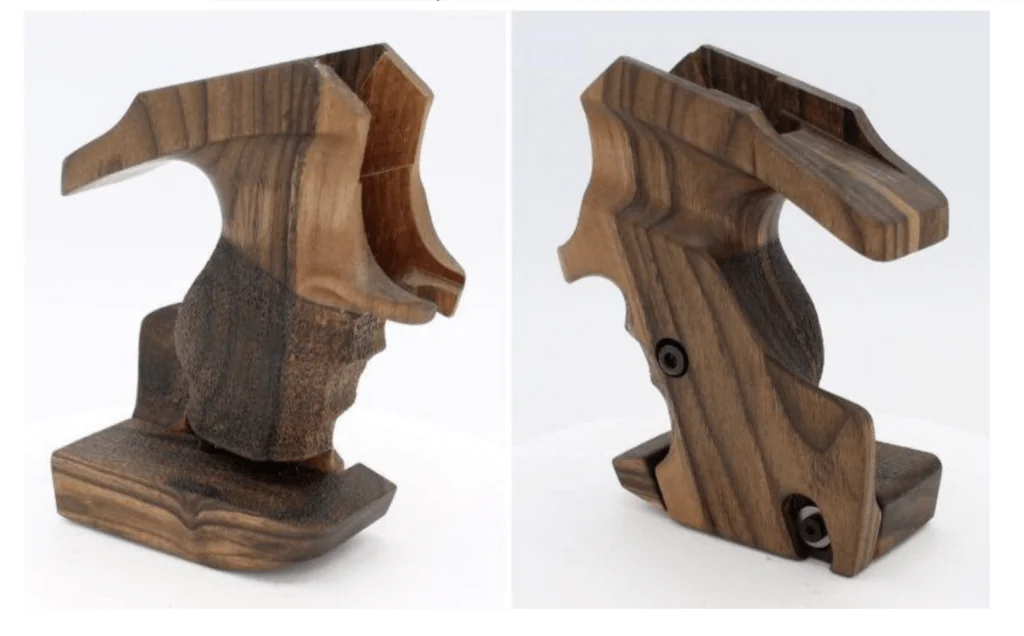
● The 5D Grip (Laminated/Walnut):
Found on Meister Manufaktur models.
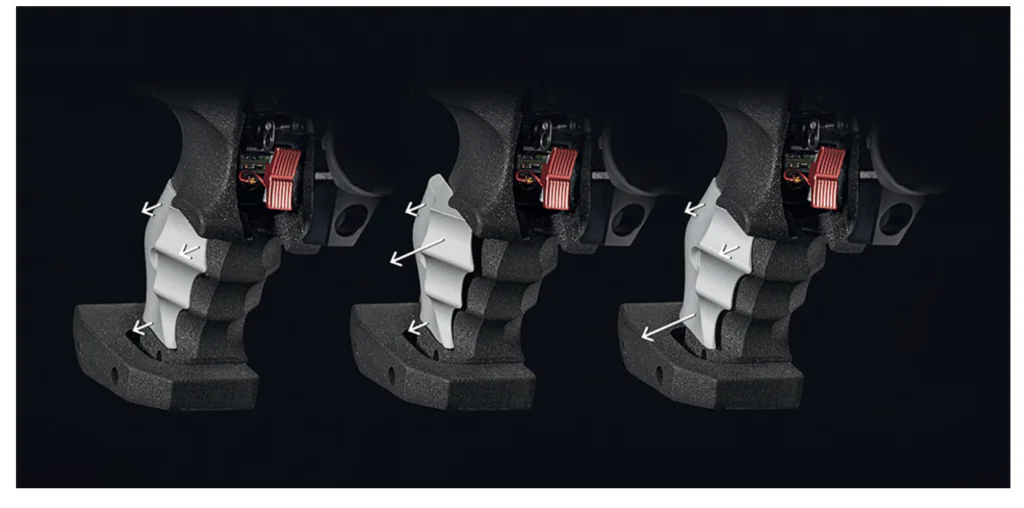
● The Innovation: In addition to the standard 3 axes, the 5D grip allows for Volume Adjustment. You can actually change the width and fullness of the grip using set screws that expand or contract the wood sections.
● Who needs it? If you have “in-between” hands—where a Medium is too tight but a Large is too loose—the 5D grip is a game changer. It allows for a glovelike fit without using wood putty or a Dremel.
4. Model Breakdown: Where is the Value?
| Feature | LP500 Basic | LP500 Expert | Meister Manufaktur |
|---|---|---|---|
| Target User | Juniors / Clubs | Competitive Shooters | National/Olympic |
| Barrel | Silver (No Ports) | Gold (Ported) | Gold (Selected) |
| Absorber | No | Yes (Linear) | Yes (Linear) |
| Cylinder | Aluminum | Aluminum | Carbon (Light) |
| Grip | Match Molded | 3D Walnut | 5D Variable |
A Note on Cylinders (Carbon vs. Aluminum)
● Aluminum: Heavier. Good if you prefer a “muzzle heavy” stable hold. Service life is legally limited to 10 years in ISSF competition.
● Carbon Composite: Extremely light. Moves the center of gravity back towards the hand. Service life is 20 years. While expensive upfront, the Carbon cylinder effectively doubles the lifespan of your power plant.
5. Final Buying Advice
Scenario A: The “Smart” Buy
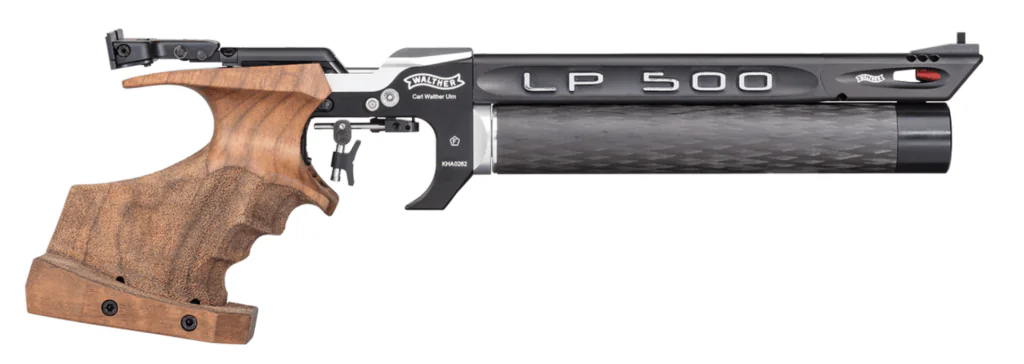
Get the Walther LP500 Expert (Mechanical).
● Why: You get the “Gold” ported barrel and the Linear Absorber, which are the most critical performance features. The mechanical trigger is world-class and reliable. You save money over the Meister edition but lose nothing in terms of accuracy.
Scenario B: The “No Compromise” Buy
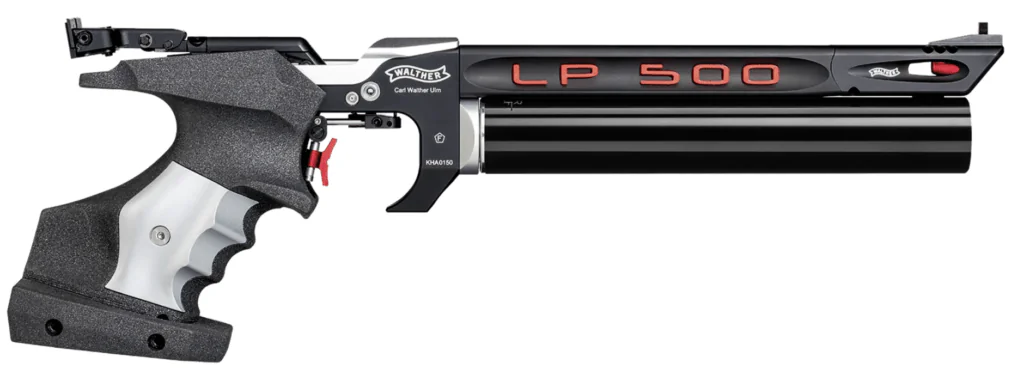
Get the LP500 Meister Manufaktur (Electronic).
● Why: You get the 5D grip for perfect ergonomics and the Carbon cylinder for longevity and balance. The electronic trigger offers the ultimate “clean” break.
Scenario C: The Budget Warning
Be cautious with the LP500 Basic.
● Why: While it is a high-quality Walther, the lack of the Absorber and Ported barrel puts it at a disadvantage compared to used flagship pistols (like a used Steyr LP10). If you cannot afford the Expert, consider saving longer or looking at the used market for a higher-tier model.