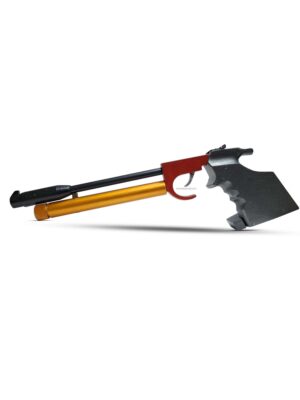
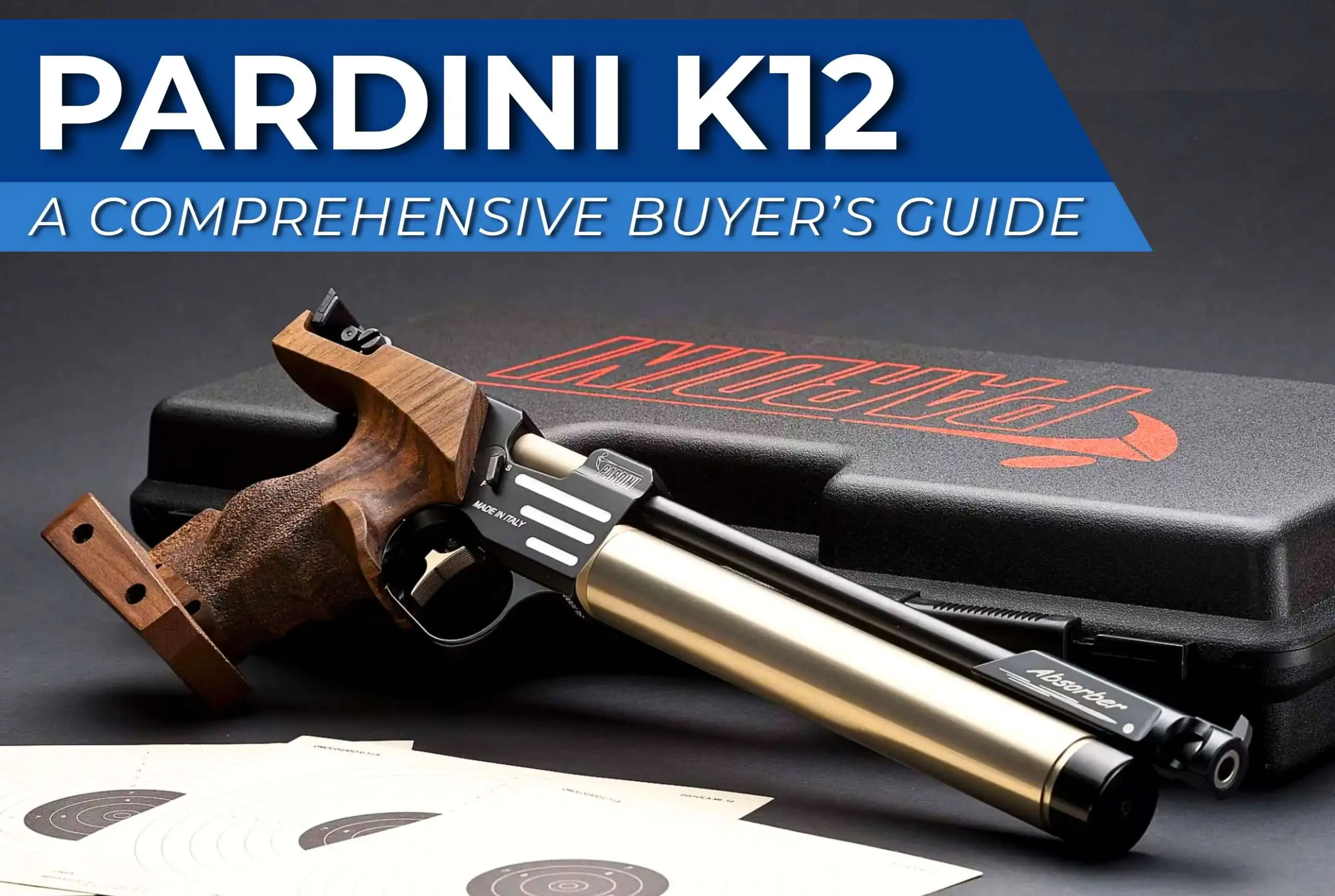
Choosing a high-end competition air pistol is a significant investment for any serious athlete. The Pardini K12, manufactured by Pardini Armi, is a prominent choice in the world of ISSF 10-meter shooting. Since its introduction in 2012, it has become a staple on the international stage, even featuring in medal-winning performances at the Paris 2024 Olympics. This guide provides a deep dive into the technical merits, ergonomic philosophy, and practical considerations of the K12 to help you determine if it is the right tool for your competitive journey.
1. The Core Innovation: The Recoil Absorber
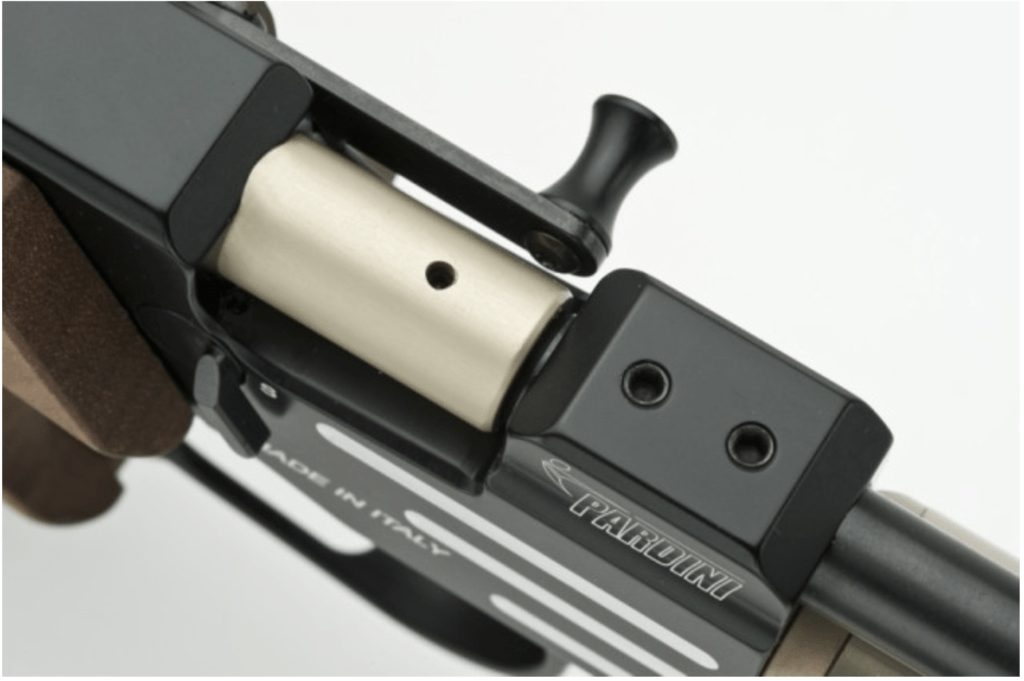
At the heart of the Pardini K12 is its patented recoil absorber system. Unlike simpler pistols that rely solely on a muzzle compensator, the K12 uses a pneumatic absorber located directly in the bolt.
● How it Works: When the shot is fired, a tungsten weight inside the bolt moves in the opposite direction of the pellet. This counteracts the rearward momentum generated by the air release and the pellet’s acceleration.
The Benefit: The result is a “dead” feel upon firing. Muzzle flip and vibration are virtually eliminated, allowing the shooter to maintain their follow-through without the distraction of physical feedback from the pistol
.2. The Trigger: A Mechanical Masterpiece While electronic triggers (found in models like the Walther LP500 or Steyr EVO 10E) are increasingly popular, many elite shooters still swear by the K12’s mechanical trigger.
● Adjustability: The two-stage trigger is fully customizable for first-stage length and weight, and second-stage weight (adjustable between 50g and 300g).
● Crispness: Users frequently describe the K12 trigger as having a “superlative quality” with a distinct, glass-like break and no noticeable creep.
● Dry-Fire Training: A dedicated, easily accessibleswitch allows for dry-fire practice
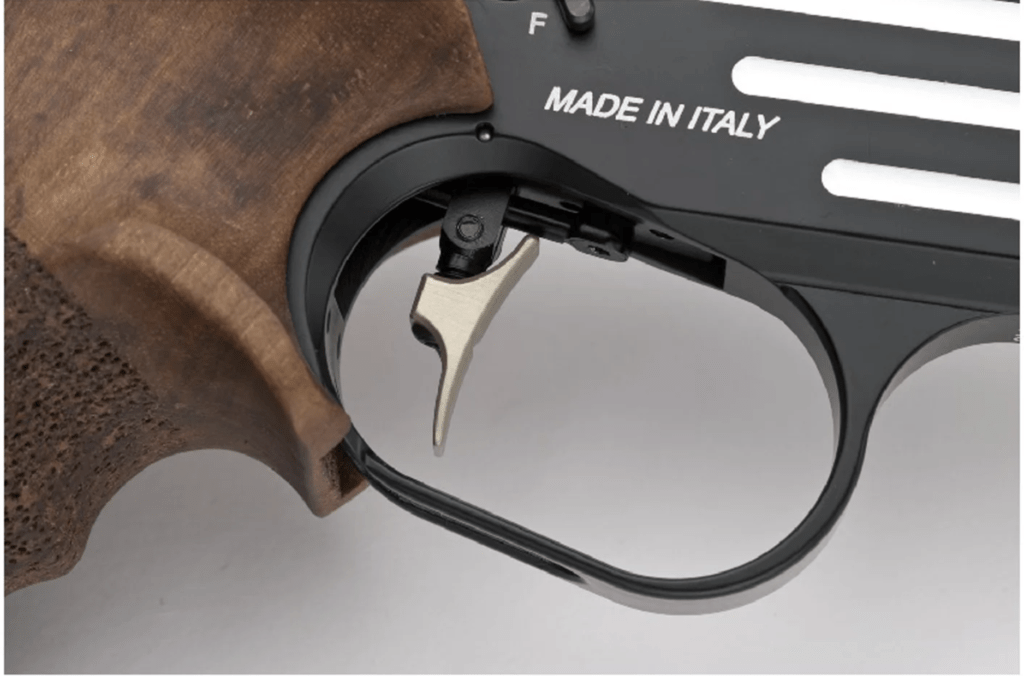
without needing to cycle the air system, a critical feature for building muscle memory and refining shot process.
3. Ergonomics and Customization
The K12 is built around an anatomical walnut grip, available in sizes from XS to L for
right-handed shooters and M to L for left-handed ones.
● Dynamic Balancing: The newer “Absorber New” models include a removable alloy
barrel sleeve. This sleeve can hold up to 10 five-gram counterweights, allowing you
to fine-tune the pistol’s balance to be as nose-heavy or neutral as you prefer.
● Color Personalization: The barrel sleeve and air cylinders are available in multiple colors (Red, Blue, Black, Silver, White, and Pink), offering up to 24 different aesthetic combinations.
● The “Nose-Heavy” Reputation: Some shooters find the K12 naturally more front-weighted than its competitors. However, the modular weight system and the ability to remove the sleeve entirely mean this is largely a matter of personal setup.
4. Technical Specifications at a Glance
|
|
|
|---|---|
|
Caliber |
4.5 mm (.177) |
|
Operating Pressure |
Up to 250 bar |
|
Barrel Length |
240 mm (Special blued steel) |
|
Total Weight |
Approximately 1040g (Standard) |
|
Sight Radius |
Adjustable from 340 mm to 385 mm |
|
Shot Capacity |
High count per fill due to 250 bar capacity |
5. Model Variations: Finding Your Fit
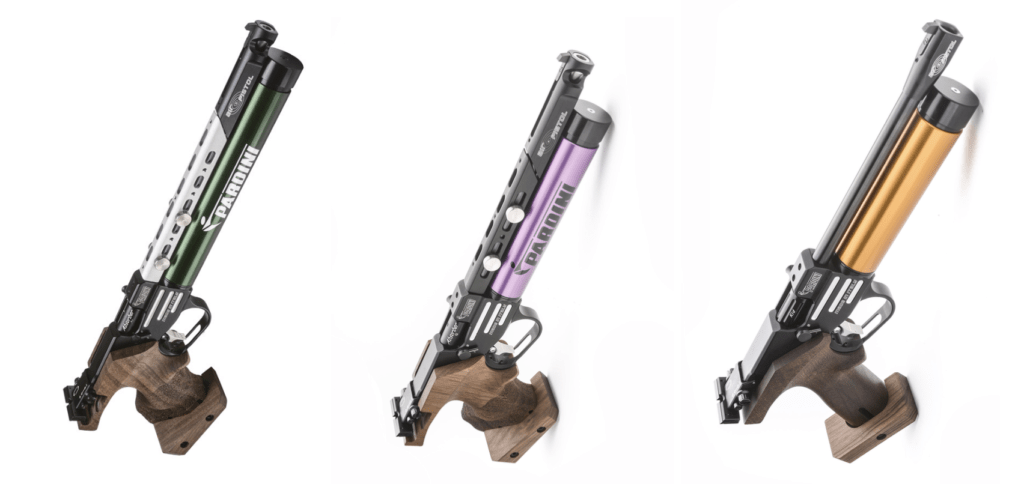
Pardini offers several variants of the K12 platform to suit different needs:
● K12 Absorber: The full-featured competition flagship.(Left Image)
● K12 Junior: A shorter, lighter version (approx. 900g) with a shorter barrel and cylinder, ideal for younger shooters or those who find the standard model too heavy.(Middle Image)
● K12 KID: A versatile, lightweight entry-level model. Its first-of-its-kind ambidextrous grip and interchangeable parts with the main K12 line allow the pistol to “grow” with a developing athlete.(Right Image)6. Comparison: K12 vs. Steyr EVO 10 and Walther LP500 The K12 competes directly with other titans like the Steyr EVO 10 and Walther LP500.
● Pardini vs. Steyr: Steyr is often cited for its legendary reliability and widespread availability of parts. The K12 is frequently praised for having a superior “fit and finish” and a trigger that feels more refined to some purists.
● Pardini vs. Walther: The Walther LP500 offers more advanced grip angle adjustments (rake and cant). The K12’s grip angle is more fixed, meaning the shooter must ensure the standard geometry works for their natural point of aim before purchasing.
7. Maintenance and Longevity
Pardini is known for long-term support of its models. However, the K12’s sophisticated absorber system does require occasional attention.
● The Absorber Weight: Owners have occasionally reported the tungsten weight becoming “sticky” after long periods of disuse. Regular shooting and periodic professional maintenance prevent this.
● Build Quality: The steel barrel is individually blued, and the high-quality pressure gauge is side-mounted for easy reading during a match without pointing the muzzle at yourself.
Final Verdict: Is it for You?
The Pardini K12 is an excellent choice for a shooter who:
1. Prioritizes a mechanical trigger with a very crisp, predictable break.
2. Desires a pistol that remains completely still upon firing.
3. Prefers a pistol that can be balanced heavily toward the front if desired.
4. Wants a high-pressure system (250 bar) to maximize the number of shots between fills.
While it lacks the extreme grip adjustability of some newer rivals, its build quality and pedigree make it a world-class contender.