I’ve spent enough years behind a diopter sight to know that aperture size is one of those details new shooters either obsess over too early or ignore for far too long. Both mistakes cost you points. Get it right, and your sight picture stops fighting you. Get it wrong, and you’ll spend a whole season chasing a problem that was never really about your technique at all.
Let us take a look at aperture size, and how you can find the right one for your own eyes.
Why Aperture Size Even Matters
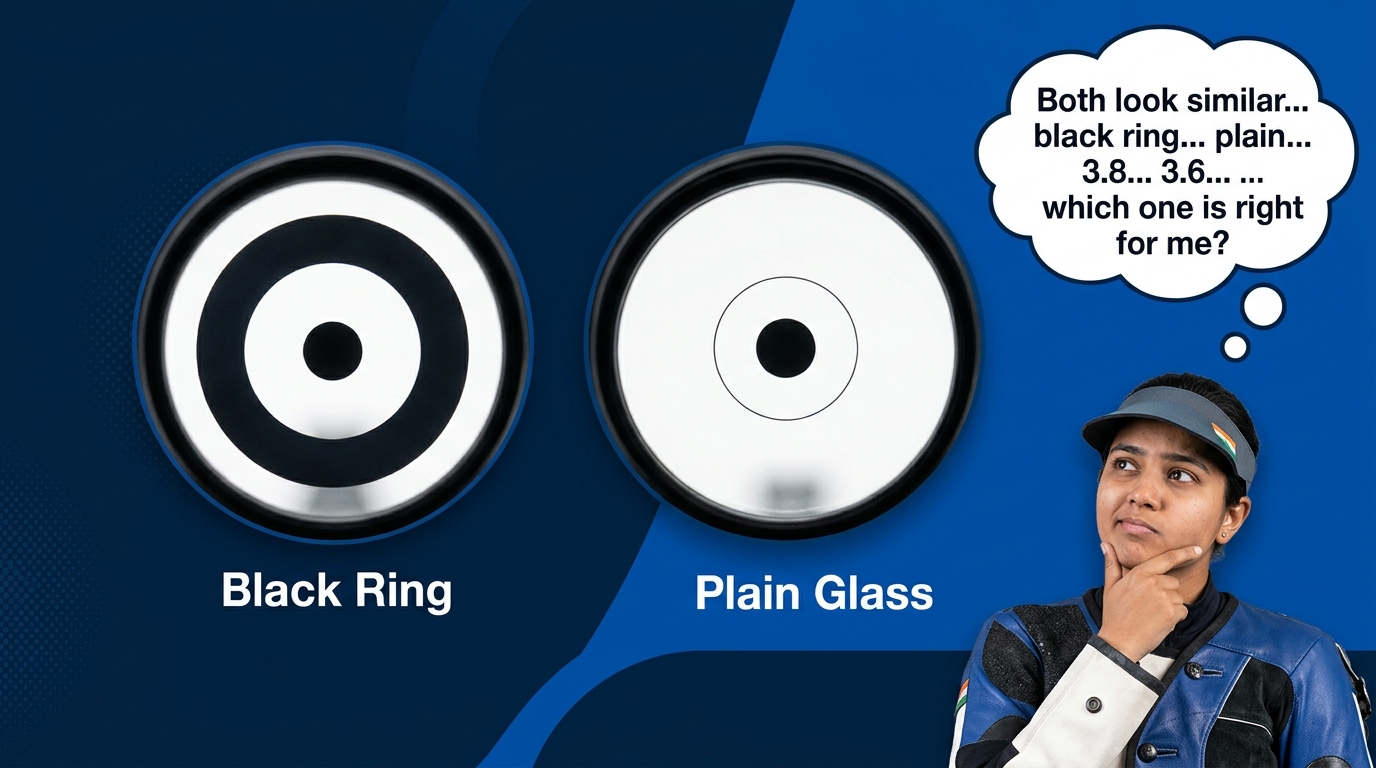
In 10m air rifle and air pistol, your rear sight is a diopter — a metal disc with a small hole you look through, rather than a notch you look over. The size of that hole controls two things at once: how much light reaches your eye, and how sharp your front sight and target appear.
A smaller aperture gives you a crisper, more defined sight picture. It narrows your depth of field and can make the front sight ring and target bull look almost painfully sharp. A larger aperture lets in more light, gives you a brighter picture, and feels more forgiving — but it can also make your alignment feel “loose,” because the edges of everything blur slightly.
New shooters often assume smaller is always better because sharper sounds like more precise. I thought that too, for about a year. It’s not that simple.
The Eye Doesn’t Work Like a Camera Lens
Your eye’s pupil naturally changes size based on light conditions, fatigue, and even how long you’ve been holding your position. If your aperture is too small, you’re forcing your pupil into an unnaturally constricted state, which increases strain and can actually cause your vision to fluctuate mid-match. I’ve had matches early in my career where my sight picture seemed to “breathe” — sharpening and softening every few seconds. That wasn’t the target moving. That was my pupil struggling against too tight an aperture on a dim range.
Too large an aperture creates the opposite issue. You get a bright, comfortable picture, but the loss of definition makes it harder to center the front sight consistently. Your groups open up not because your hold is worse, but because you can no longer detect small errors in alignment.
The right aperture size sits between these extremes, and it’s specific to your eye, your lighting conditions, and even your age (pupil response slows down as you get older, which is worth knowing if you’ve been shooting for a decade or more).
How I Actually Test Aperture Size
Here’s the process I use with shooters I coach, and the one I still use on myself when something feels off:
- Start in your normal range lighting. Aperture size is meaningless in isolation — it only matters relative to the light you’ll actually compete in. Never test this at home under a desk lamp.
- Begin slightly larger than you think you need. Dial your diopter open a notch or two beyond what feels “sharp.” Take a few sighter shots. Pay attention to comfort and brightness, not sharpness yet.
- Gradually reduce the aperture in small increments. After each adjustment, take another few shots. You’re looking for the point where the picture sharpens noticeably without your eye needing to “search” or refocus.
- Stop the moment you notice strain. This is the part people rush. The correct aperture is usually one or two clicks larger than the sharpest possible image, not the sharpest image itself. If your eye has to work to hold that sharpness, you’ve gone too small.
- Test again after 15–20 minutes of shooting. Aperture size that feels right when you’re fresh can feel too tight once your eye fatigues. This is why I always retest toward the end of a practice session, not just at the start.
Signs Your Aperture Is Wrong
A few patterns I’ve learned to recognize over the years:
- Vertically Strung Groups: If your groups are vertically strung, your aperture might be too small, causing fatigue-driven focus shifts during longer strings.
- Lateral Group Drift: If you feel like you can’t quite “lock in” on the front sight and your groups drift laterally, your aperture might be too large, robbing you of definition.
- Excessive Blinking or Eye Fatigue: If you find yourself blinking more than usual or your eyes feel tired after a short session, that’s almost always a sign the aperture is too tight for the lighting you’re shooting in.
Don’t Ignore Front Sight and Rear Sight Together
Aperture size doesn’t exist in isolation from your front sight setup. A smaller rear aperture paired with a wide front sight ring can look different than the same aperture paired with a tighter ring. When I’m dialing in a new setup, I treat rear aperture and front sight ring size as a single system, not two separate decisions. Change one, and you may need to revisit the other.
A Note on Iris Attachments
Many shooters use adjustable iris attachments on their rear sight, which let you fine-tune aperture size in tiny increments without swapping physical discs. If you’re serious about this sport, I’d consider this one of the better upgrades you can make early on. It removes the guesswork of swapping fixed-size discs and lets you make in-the-moment adjustments if lighting changes over the course of a long match day, which happens more often than you’d expect, especially at ranges with natural light or inconsistent artificial lighting.
Learning to Trust the Process, Not the First Instinct
One thing I tell newer shooters constantly: don’t judge your aperture setting based on a single string of five or ten shots. The temptation is to make a change, shoot a quick end, see a tighter group, and declare victory. Groups fluctuate for all sorts of reasons that have nothing to do with your sight setup — a small wobble in hold, a slightly rushed trigger break, or simple luck. Give any new aperture setting at least twenty to thirty shots across a couple of sessions before you trust the data. I’ve reversed my own “final” decision more than once after a second day of testing told a different story than the first.
It also helps to keep a simple log. Note the aperture size, the lighting conditions, and how your eyes felt at the start versus the end of the session. Over a season, this record tells you far more than memory alone ever will, and it saves you from re-learning the same lesson every few months.
The Bottom Line
Aperture size isn’t a fixed number you copy from a teammate or a chart online. It’s a personal setting shaped by your eyesight, your pupil response, your range’s lighting, and even how long you’ve been standing under sight for that session. Treat it as something you revisit periodically, not something you set once and forget. I still make small adjustments a few times a year, usually after a change in range lighting or after a long break from competition.
Get this one detail right, and a surprising number of “technique” problems tend to quietly disappear.