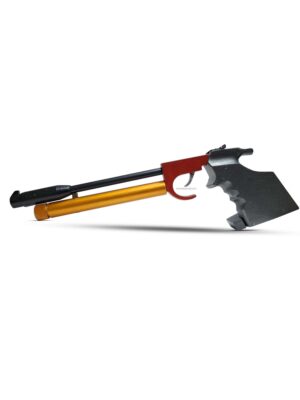
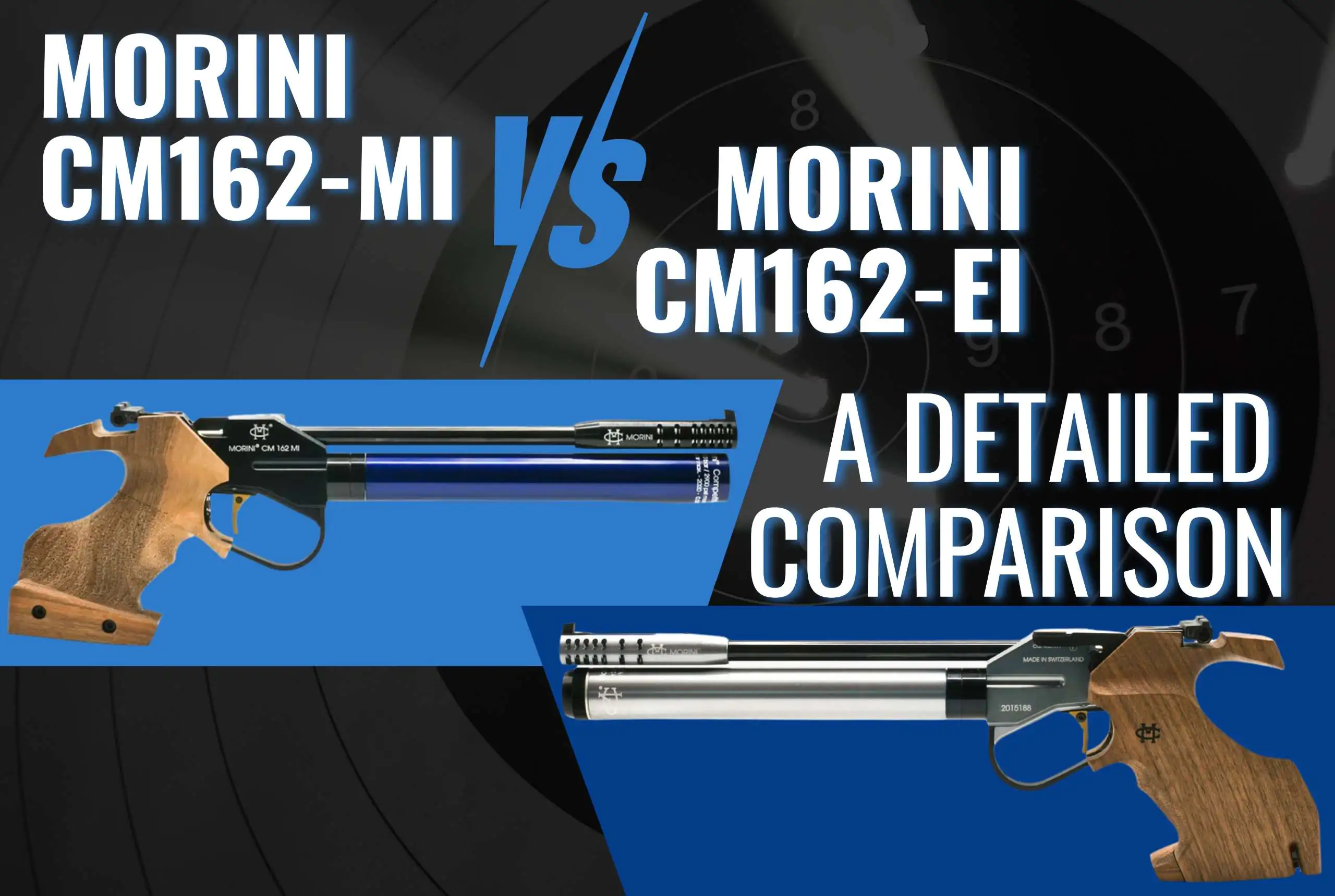
In the hyper-precise world of 10-meter air pistol shooting, where the difference between goldand silver is measured in tenths of a millimeter, equipment is not merely a tool; it is an extension of the athlete’s physiology. While there are several manufacturers that produce world-class pneumatic arms—Steyr, Feinwerkbau, Pardini, and Walther among them—few evoke the same reverence as Morini. Specifically, the Morini CM162 series has firmly established itself as the “winningest” platform in modern Olympic history. Within this legendary lineage lie two distinct siblings: the CM162MI (Mechanical) and the CM162EI (Electronic). To the uninitiated, they look nearly identical. To the elite shooter, they represent two fundamentally different philosophies of control. This article explores the shared DNA of these Swiss masterpieces and the critical differences that divide their loyal fanbases.
The Morini Lineage: Swiss Precision, Italian Soul
To understand the 162 series, one must understand the company’s evolution. Morini Competition Arm S.A., originally founded in Italy as an anatomical grip manufacturer, eventually moved its production to Bedano, Switzerland. This move was pivotal. It married he ergonomic genius of Italian grip design with the uncompromising tolerances of Swiss machining. The CM162 was born during the transition from CO2 to pre-charged pneumatic (PCP) air systems. PCP systems revolutionized the sport by using compressed air (usually at 200 bar) to propel the pellet. This eliminated the temperature sensitivity of CO2, ensuring that the velocity of the first shot matched the velocity of the sixtieth, regardless of the ambient heat in the range. The CM162 series was not just a participant in this revolution; it was a leader.
Shared DNA: The Architecture of Excellence
Before dissecting their differences, it is vital to acknowledge the shared engineering that makes a “Morini a Morini. ” Regardless of whether you choose the MI or the EI, you are buying into a specific chassis and ergonomic philosophy.
1. The Legendary Grip
Morini is arguably more famous for its grips than its guns. In fact, many shooters who use Steyr or Pardini pistols discard the factory grips and install aftermarket Morini grips. On the CM162 series, this legendary walnut interface comes standard. The grip is adjustable in multiple dimensions—rake, angle, and volume—allowing the pistol to sit deep in the hand, lowering the bore axis and reducing muzzle flip. The stippling is aggressive enough for traction but comfortable enough for a 60-shot match.2. The Barrel and Compensator Both models utilize a Lothar Walther precision barrel, widely regarded as the industry benchmark for accuracy. At the muzzle end, both feature a compensator that strips turbulent air away from the pellet as it exits the barrel. This prevents the air blast from destabilizing the projectile and also acts as a muzzle brake to dampen recoil.
+1
3. The Sight Picture
The sighting system on both the MI and EI is robust and highly adjustable. The rear sight allows for the adjustment of the width and depth of the notch—a critical feature for shooters who need to customize the amount of “light gap” on either side of the front sight post. The sight radius is long, which aids in precision, though it demands a steadier hold from the shooter.
The CM162MI: The Mechanical Purist
The CM162MI is the mechanical iteration of the platform. In this system, the trigger blade is connected via physical linkages, springs, and sears to the hammer. When you pull the trigger, you are physically overcoming the friction of the sear engagement to release the hammer, which strikes the valve and releases the air.
The Appeal of the Mechanical
For traditionalists, the MI offers a distinct advantage: tactile feedback. A mechanical trigger has a “soul. ” You can feel the stages of the pull—the first stage travel, the “wall” (the point of resistance), and the crisp break. Some shooters prefer this physical connection, arguing that it provides better feedback on their trigger control. Furthermore, the MI is simpler. There are no electronics to fail, no batteries to leak, and no circuit boards to corrode. It is a machine in the purest sense, relying on physics and geometry. For a shooter in a remote location or one who distrusts technology, the MI provides peace of mind.
The Drawbacks
However, physics imposes limits. A mechanical trigger will always have a longer “lock time” than an electronic one. Lock time is the milliseconds that elapse between the trigger break and the pellet leaving the barrel. The longer the lock time, the more time there is for the shooter to disturb the aim after the decision to fire has been made. Additionally, mechanical triggers can be prone to “creep” (movement of the trigger after the wall is hit but before the shot breaks) if not perfectly tuned. Dry firing the MI (simulating a shot without air) is also more cumbersome, usually requiring the shooter to operate a lever or the cocking mechanism to reset the trigger, which breaks the shooting stance.The CM162EI: The Electronic Revolution The CM162EI is the flagship. It is the pistol that has been seen on more Olympic podiums in the last two decades than perhaps any other. In the EI, the trigger is not a mechanical lever; it is a switch. Pulling the trigger closes a circuit, sending a signal to a solenoid. The solenoid energizes instantly, knocking the hammer onto the valve.
The Electronic Advantage
The advantages of this system are profound.
1. 2. 3. Zero Hysteresis: Because there is no sear friction to overcome, the trigger pull is theoretically perfect. The first stage is just a spring; the second stage is just a stiffer spring. The “break” is the closing of a switch. This allows for a trigger that feels like snapping a glass rod—incredibly crisp and consistent.
Lock Time: The electronic signal travels at the speed of light, and the solenoid reacts faster than any mechanical linkage. The lock time on the EI is blindingly fast. This makes the pistol more forgiving; the pellet exits the barrel before the shooter’s micro-tremors can throw the shot off target.
Dry Fire Training: This is the EI’s “killer app. ” To dry fire, you simply turn the gun on and pull the trigger. The solenoid clicks, simulating the shot release, but no air is released. You do not need to rack a slide or lift a lever. You can dry fire 100 times without ever changing your grip or moving your arm. For elite training, this is invaluable.
The Battery Evolution
Early versions of the EI used a specialized 15V battery that was expensive and hard to find. However, modern iterations have been updated to use two standard AAA batteries, which provide roughly 25,000 shots. This update removed the only major logistical headache of the electronic model.
Head-to-Head: Which is the Master?
When choosing between the MI and the EI, the decision often comes down to budget and philosophy. The CM162EI is generally more expensive. It is the choice of the technocrat, the shooter who wants every possible engineering advantage. It is slightly heavier due to the batteries and electronics board, but Morini has balanced this weight perfectly towards the wrist to reduce fatigue. The electronic trigger is widely considered superior for rapid fire or timed series finals because the reset is instantaneous and effortless. The CM162MI is the choice of the pragmatist. It is often slightly cheaper and is viewed as “bombproof. ” Shooters who have grown up on mechanical firearms often find the transition to the MI more natural, whereas the “click-switch” feel of the EI can feel alien to someone used to a sear break.However, the market has spoken. At the World Cup level, the electronic trigger reigns supreme. The forgiveness provided by the faster lock time and the purity of the trigger break offers a statistical advantage that elite competitors cannot ignore.
Conclusion: The Verdict
Both the Morini CM162MI and CM162EI are masterpieces of Swiss manufacturing. They are capable of shooting perfect scores; the limit is always the human holding them, not the machine. If you are a shooter who values traditional mechanics, total self-reliance without batteries, and a distinct tactile feedback, the CM162MI will serve you for a lifetime. However, if you are chasing the absolute pinnacle of performance, where milliseconds matter and training efficiency is paramount, the CM162EI stands alone. Its electronic heart beats faster than any mechanical linkage, offering a level of connection between thought and action that is the closest thing to shooting by telepathy. In the debate of Morini vs. Morini, the electronic brother has, by and large, claimed the throne.